
Table of Contents
- Why Adults Start Violin Lessons Later in Life
- How Hard Is It to Learn Violin as an Adult
- Best Violin for Adult Beginners: What to Know Before You Buy
- Finding the Right Teacher for Your Learning Style
- What to Expect in Your First Violin Lessons
- How Long Does It Take to Learn Violin as an Adult
- Building an Adult Violin Practice Routine That Works
- Overcoming Common Adult Beginner Obstacles
- Frequently Asked Questions
Last Updated: October 11, 2026
Why Adults Start Violin Lessons Later in Life
It’s never too late to pick up the violin, and violin lessons adult learners take can transform your life at any age. Many adults feel drawn to music they grew up hearing, or they finally have the time and freedom to pursue something they’ve always wanted to try. At 380 Music Studio, we’ve worked with plenty of adult beginners who discover that learning an instrument brings unexpected joy and satisfaction to their lives.
Adults come to violin for different reasons: to challenge themselves mentally, find a creative outlet, or simply because they love the sound. Your reason is enough.
How Hard Is It to Learn Violin as an Adult
Learning violin as an adult is challenging but absolutely doable. The violin has a steeper initial learning curve than some instruments, but difficulty and impossibility are different things.
What makes it manageable: you understand patience, you can focus intentionally on practice time you’ve chosen, and your life experience with music helps you learn faster than you might expect.
The real challenge is consistency. Stiff fingers and an awkward bow arm are temporary obstacles. A teacher who understands adult learners adjusts the pace to match your body and goals.
Best Violin for Adult Beginners: What to Know Before You Buy
Choosing your first violin matters. You want something that plays well enough to encourage you without spending a fortune before you’ve started lessons.
Understanding Violin Types and Sizes
Violins come in one standard size for adults (4/4). What matters is the instrument’s condition and playability, it should respond to your bow, stay reasonably in tune, and feel comfortable to hold. A poorly made instrument will fight you at every step.
When looking at violins, check: the bridge is straight and properly positioned, strings are in good condition (not worn or corroded), the bow hair grips the strings without slipping, and the setup (adjustment and assembly) is solid. Setup matters more than brand name.
Have your teacher assess an instrument’s playability before you commit to renting or buying.
Rental vs. Purchase: Real Trade-offs
Renting makes sense if you’re uncertain about long-term commitment. You avoid a large upfront cost, and rentals typically include maintenance and repairs. The downside: rental fees add up over time, and rental instruments are often basic models.
Buying makes sense if you’re confident you’ll stick with it. You avoid monthly fees and develop a relationship with your instrument. Your teacher can point you toward playable beginner instruments worth the investment.
Where to Find a Beginner Violin
Avoid extremely cheap instruments sold online. Work with a local music shop or luthier in Aubrey and the 380 Corridor who can let you try instruments and set them up properly. Your teacher at 380 Music Studio can recommend specific shops.
Essential Accessories You’ll Actually Need
Essential accessories: a bow (confirm it’s included and playable), rosin (for bow hair), a chin rest, a shoulder rest, a music stand, and a case. Your teacher will help you understand what you need now and what can wait. Start with essentials and adjust based on what feels right for your body.
Finding the Right Teacher for Your Learning Style
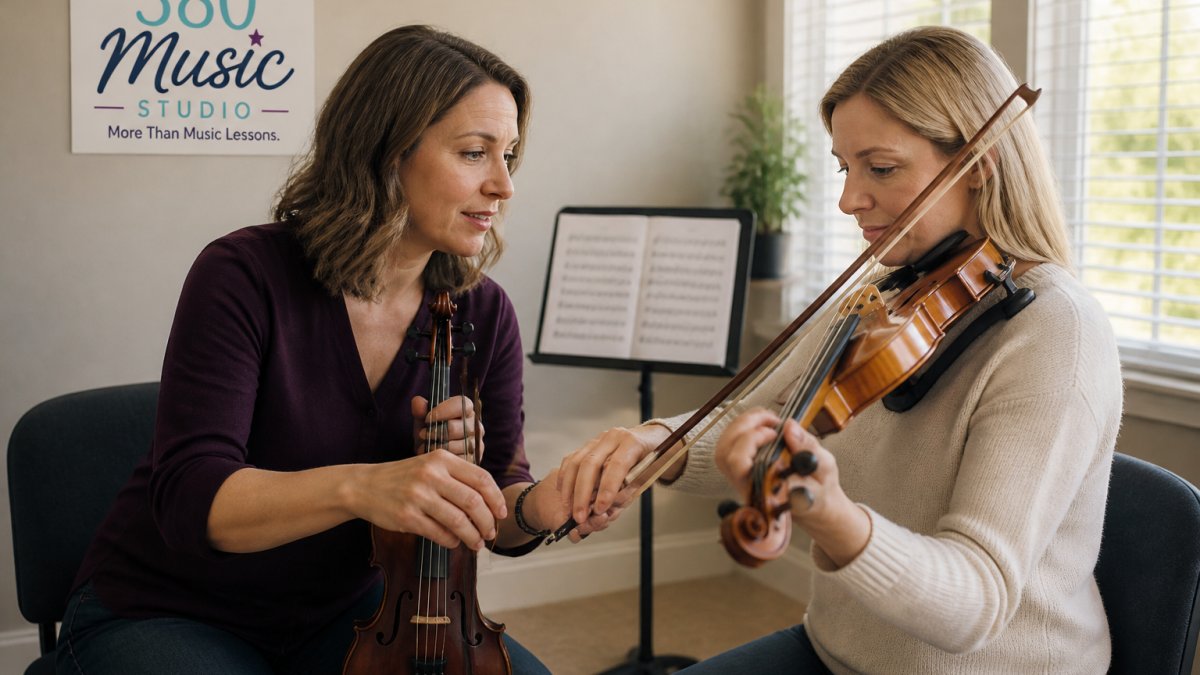
Finding the right teacher for violin lessons adult students need is the most important decision. Look for someone with experience teaching adults who listens to your goals, explains things clearly, and treats mistakes as part of learning. At 380 Music Studio, our teachers work with adults of all backgrounds, focusing on building confidence and making lessons enjoyable. Your teacher will help you choose what to learn, how fast to progress, and how to practice in ways that fit your life.

What to Expect in Your First Violin Lessons
Your first lessons focus on basics: holding the violin and bow, and producing your first sounds. Expect tense shoulders, a shaky bow arm, and sore fingers, all normal as your body learns something new. Your teacher will make small adjustments to help you find comfort and control. Within a few weeks, you’ll play recognizable melodies like “Twinkle, Twinkle, Little Star,” and that moment is when it clicks for many people.
How Long Does It Take to Learn Violin as an Adult
Most adult beginners see real progress within three to six months of consistent practice. You’ll move past the scratchy beginner phase, improve your tone, and feel more comfortable with the instrument. An adult who practices 20 minutes four times a week will progress faster than someone who practices an hour once a week. Your teacher will help you find a routine that fits your life.
Building an Adult Violin Practice Routine That Works
Practice doesn’t mean sitting down for hours. It means focused time with your instrument, regularly, and for adults, “regularly” often means fitting it into a life that’s already full.
Start Small and Build Consistency
Fifteen to twenty minutes most days beats an hour once a week. When you practice regularly, your hands remember what they learned. When you practice once a week, you spend the first 20 minutes relearning what you forgot. Start with a realistic commitment, 20 minutes daily is better than burning out after ambitious longer sessions.
A Realistic Practice Structure
When you sit down to practice, here’s a structure that works:
- Warm up (5 minutes): Simple exercises your teacher shows you. These get your fingers loose and your bow arm ready. They don’t feel like “real” playing, but they prevent injury and make everything else easier.
- Work on current pieces (10-15 minutes): Whatever you’re learning right now. This is where you focus on the specific challenges your teacher identified, maybe it’s a tricky bow transition, or a passage where your fingers fumble. Work slowly, repeat the hard parts, and don’t rush through to the end.
- Explore something fun (5 minutes): Play whatever you want, even if it’s just noodling around or revisiting a piece you learned weeks ago. This reminds you why you started. It’s the part that feels like playing music, not practicing technique.
That’s 20-25 minutes total. If you have more time, great, add another 10 minutes to any section. If some days you only have 15 minutes, that still counts. Fifteen minutes of focused practice is infinitely better than skipping the day entirely.
Finding Your Practice Time
The hardest part isn’t the practice itself; it’s making it a habit in a life that’s already scheduled.
Pick a time that works for your actual life, not your ideal life. Morning before work? Lunch break? Evening after dinner? Right after you get home, before you sit down? The best time is the one you’ll actually do it.
Treat it like an appointment you can’t move. Not because it’s rigid or joyless, but because protecting that time is how you protect your progress. If you let it slide when work gets busy or life gets chaotic, you’ll lose momentum. If you defend it the way you’d defend a doctor’s appointment, it becomes part of your week.
Many adult learners find that practicing at the same time every day makes it easier. Your brain and hands start expecting it. You’re not deciding whether to practice; you’re just doing what you always do at that time.
Dealing with Irregular Schedules
Some weeks will be busier than others. Travel, work deadlines, family obligations, life happens. When you know a busy week is coming, adjust your expectations instead of skipping practice entirely.
If you normally practice 20 minutes five days a week, maybe that week you practice 10 minutes three days. It’s not ideal, but it keeps the habit alive. You’re not starting from zero when things calm down.
Your teacher understands that adult life is unpredictable. They’re not expecting perfection. They’re expecting you to show up and do what you can. That consistency, even when it’s imperfect, is what builds progress.
Staying Motivated When Progress Feels Slow
There will be weeks when you feel like you’re not improving. You’re playing the same pieces, making the same mistakes, and wondering if you’re wasting your time. This is completely normal, and it happens to every adult learner.
When motivation dips, remember:
- Progress isn’t always visible week to week. You might not notice that your bow control is smoother or your finger transitions are faster until you look back at a recording from a month ago.
- Your teacher sees progress you don’t. They hear improvements in tone, timing, and confidence that you might miss because you’re focused on what’s still hard.
- Small wins count. Playing a passage cleanly once, even if you stumble the next time, is progress. Your hands are learning.
- The joy is in the playing, not the destination. Some weeks you’ll practice because you want to. Some weeks you’ll practice because it’s your routine. Both are fine.
Your teacher can suggest specific pieces or exercises that feel rewarding, help you set realistic milestones, and celebrate the progress you’re actually making. They’re invested in keeping you motivated and moving forward.
What Your Teacher Helps You With
You don’t figure out your practice routine alone. Your teacher will:
- Suggest specific exercises and pieces that match your level and goals
- Show you exactly how to practice the hard parts (slow practice, repetition, breaking it into chunks)
- Help you adjust your routine if something isn’t working
- Celebrate progress and keep you encouraged when things feel slow
Bring questions about practice to your lessons. “I only have 15 minutes on Thursdays, what should I focus on?” or “I’m stuck on this passage” or “I’m losing motivation” are all things your teacher can help with. That’s what they’re there for.
Overcoming Common Adult Beginner Obstacles
Adult learners face real challenges. Recognizing them helps you work through them.
Stiff fingers and sore hands, Your hands aren’t used to this. Your fingers will feel stiff initially. Stretching before practice helps. So does starting gently and building up.
Feeling self-conscious about sounding bad, You will sound bad at first. Everyone does. The violin is unforgiving in the beginning. But that phase is temporary.
Struggling to find practice time, Life is busy. You have work, family, responsibilities. But even fifteen minutes matters. Protect that time the way you’d protect an appointment. It’s for you.
Comparing yourself to others, You might watch videos of skilled violinists and feel discouraged. Don’t. They’ve been playing for years. You’re weeks or months in. You’re on your own timeline.
Wondering if you’re “too old”, You’re not. Your age is actually an advantage in some ways. You bring focus, motivation, and patience that younger learners are still developing.
The adults who succeed at violin are the ones who accept that progress is gradual and that mistakes are part of learning. Your teacher will help you stay encouraged and keep moving forward.
Starting violin lessons as an adult opens up a whole new world.
Frequently Asked Questions
Can adults learn violin even if they have never played an instrument?
Absolutely. Many adults start violin lessons with no musical background at all. Your teacher will work at your pace, starting with the fundamentals and building your skills step by step. There’s no prerequisite experience needed, just a willingness to learn and practice consistently. Adults often bring focus and discipline to lessons that helps them progress steadily.
How long does it take to learn violin as an adult?
Progress depends on how often you practice and take lessons. Most adult beginners see noticeable improvement within 3-6 months of consistent practice. Playing simple melodies typically takes a few months, while building solid technique takes longer. Your teacher will help you set realistic milestones based on your goals and schedule. Remember, everyone’s timeline is different, the focus is on enjoying the journey, not racing to a finish line.
What kind of violin should an adult beginner get?
A quality student violin is a solid starting point for adult beginners. Many students rent first to make sure they’re committed before investing in a purchase. Your teacher can recommend instruments that offer good sound and playability. You’ll also need a bow, rosin, a chin rest, and a case, your teacher will guide you on these essentials.
How much should an adult beginner practice violin?
Most adult beginners benefit from 20-30 minutes of practice, 3-4 times per week. Consistency matters more than long practice sessions. Your teacher will suggest a practice routine tailored to your schedule and goals. Even short, focused practice sessions build muscle memory and keep you making progress between lessons. Your teacher will help you develop habits that fit your lifestyle.