
Table of Contents
- How to Prepare Your Child for Their First Music Lesson
- What to Expect at a First Music Lesson
- What to Bring to a Music Lesson
- How to Help Your Child Feel Confident Before Music Lessons
- Building a Routine: How Long Should Kids Practice Music
- Preparing Your Home and Setting Expectations
- The Week Before: Your Preparation Checklist
- Frequently Asked Questions
Last Updated: October 10, 2026
How to Prepare Your Child for Their First Music Lesson
Getting ready to prepare child first lesson is exciting, and maybe a little nerve-wracking. A little preparation goes a long way in helping your child feel confident, curious, and ready to learn.
At 380 Music Studio, we’ve worked with hundreds of families in Aubrey and the surrounding Highway 380 communities as their children took their first steps into music. The good news: you don’t need to be musical yourself. What matters most is creating calm anticipation and helping your child understand what to expect.
What to Expect at a First Music Lesson
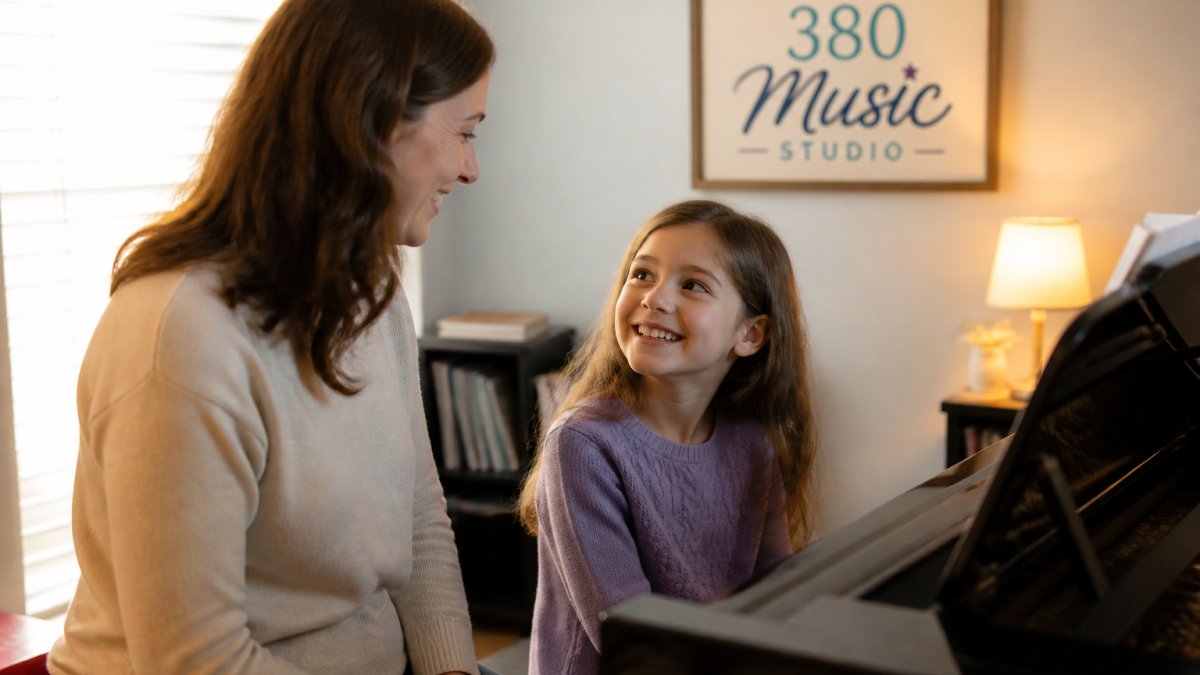
Your child’s first lesson is a chance for your child and their teacher to get to know each other. The teacher will talk with your child about what drew them to music, listen to their goals, introduce the instrument, and guide them through some simple sounds. The goal is to make your child feel at ease and excited, not overwhelmed.
A Typical First Lesson Timeline
Most first lessons last 30 to 45 minutes. Your child will meet the teacher, learn about the instrument, try something simple with guidance, and hear what comes next. They’ll leave having had fun and feeling ready to come back.
What to Bring to a Music Lesson
Bring the instrument (if you own one), a notebook and pencil for the teacher’s notes, a water bottle, and any materials the studio requested. Your teacher will let you know if anything else is needed. Don’t worry about fancy equipment, simple is fine.
How to Help Your Child Feel Confident Before Music Lessons
Talk with your child about what lessons are like: “You’ll meet a teacher who loves music and will show you how to make sounds on your instrument. You might feel unsure at first because everything is new, but that’s normal.” Avoid pressure to be perfect, this isn’t a test. Your child’s only job is to show up and be curious.

Let your child pick the instrument if they haven’t already. When a child chooses, they’re invested. If your child is torn between options, talk it through with them about what sounds they love. Their teacher can also help guide this choice based on your child’s age, size, and interests.
Building a Routine: How Long Should Kids Practice Music
Practice happens between lessons, and it’s where real learning takes place. But here’s what matters: consistency beats intensity, and knowing how to start, and what to do when things get hard, makes all the difference.
How Much Practice, and How Often?
Your child’s teacher will guide practice expectations based on your child’s age, instrument, and level. For a beginner, 15 to 20 minutes most days is a solid start, even less for very young students. That’s not a lot of time, but it’s enough to reinforce what they learned in their lesson and build the habit. Some weeks might be lighter (maybe three or four days), and that’s fine.
Don’t think of practice as a fixed block of time. A younger child might do 10 minutes one day and 15 the next. An older child might do 20 minutes four days a week. Your teacher will write down what to practice and how long to spend on it, so you have a clear target.
Setting Up Your Practice Space
Create a space where your child can practice without too much distraction. It doesn’t need to be fancy, a corner of the living room works fine. What matters is that it’s quiet enough for your child to hear themselves and focus.
If you have multiple children, stagger their practice times so one isn’t distracted by the other. If you live in a small space or an apartment, talk with your teacher about timing, maybe practice happens at a time when noise is less of an issue for neighbors.
Have the instrument, notebook, and any materials the teacher gave you in that space. When everything is ready to go, your child doesn’t have an excuse to delay or get distracted hunting for things.
The First Practice Session: How to Start
The first practice after the first lesson is crucial. Your child might feel excited, or they might feel uncertain about what to do. Here’s how to set it up for success:
Before practice starts: Review what the teacher wrote down or told you. If the notes are unclear, text or call the studio to ask. You don’t need to be a musician to help your child practice, you just need to know what they’re supposed to work on.
During practice: Sit nearby but don’t hover over your child’s shoulder. Your presence is reassuring, but constant correction or commentary can make practice feel like a test. Let your child try things. If they get stuck, remind them what the teacher said, or suggest they try it a different way. If you’re not sure, that’s what the next lesson is for.
Keep it positive: “Let’s see what you learned” is better than “Let’s practice.” “I want to hear what you’ve been working on” is better than “You need to practice.” Small shifts in language make practice feel like exploration, not obligation.
What to Do When Frustration Hits
Most children hit a moment during practice where something doesn’t sound right, or they can’t do it yet, and they feel frustrated.
Don’t fix it for them. If your child is struggling with a sound or a technique, resist the urge to grab the instrument and show them.
Normalize the struggle: “Sometimes it takes a few tries to get it right. That’s how learning works.
Take a break if needed: If your child is genuinely upset or shutting down, stop practice. A frustrated child won’t learn anything in those moments.
Celebrate small wins: “Did you hear how much clearer that sounded?” or “You tried that three times and got closer each time.” Notice effort and progress, not just perfection.
Between Lessons: What Your Teacher Guides
Your child’s teacher isn’t just teaching during the 30 or 45 minutes of the lesson, they’re setting up your child to practice successfully in between. At the end of each lesson, the teacher will:
- Write down exactly what to practice (specific exercises, songs, or techniques)
- Show your child how to practice it
- Explain how long to spend on it
- Answer questions about what might be confusing
If your child comes home and says “I don’t know what to practice,” that’s a sign to reach out to the studio. The teacher might need to clarify the assignment, or your child might need a written reminder to bring home.
Some teachers also use practice journals or apps to track what was done between lessons. If your teacher uses this, it helps them see what your child worked on and what might need adjustment.
Building the Habit
Set up a practice routine that works for your family. Same time, same place if possible. Maybe it’s right after school, or after dinner, or on weekend mornings. When practice becomes part of the daily rhythm, it stops feeling like a chore and starts feeling like “just what we do.”
For the first month or two, you’ll probably need to remind your child to practice. That’s normal. Eventually, as your child starts to enjoy playing and sees progress, practice becomes something they want to do. You’ll know it’s working when your child asks to practice, or when you hear them playing on their own.
Preparing Your Home and Setting Expectations
Create a space where your child can practice without too much distraction. It doesn’t need to be fancy, a corner of the living room works fine. What matters is that it’s quiet enough for your child to hear themselves and focus.
Set clear expectations about practice time. Help your child understand that practice is part of learning music, just like homework is part of school. It’s not optional, but it’s also not punishment. It’s how they get better.
Talk with your child about what they might feel during practice. “Sometimes it feels frustrating when something doesn’t sound right yet. That’s normal. That’s how learning works.
The Week Before: Your Preparation Checklist
Use this checklist in the week before your child’s first lesson to make sure everything is ready:
- Confirm the lesson date, time, and location
- Ask the studio what to bring (instrument, notebook, etc.)
- Talk with your child about what to expect
- Gather any materials the studio requested
- Set up a practice space at home
- Arrange transportation and pickup if needed
- Help your child get a good night’s sleep the night before
- On lesson day, arrive a few minutes early so your child isn’t rushed
The goal of this checklist isn’t perfection, it’s peace of mind. When you’ve thought through the details, you and your child can walk in feeling ready.
Starting music lessons is the beginning of something special. Your child is about to discover what they can create, express, and achieve through music. At 380 Music Studio in Aubrey and throughout the Highway 380 corridor, we make sure every first lesson sets that journey up for success. Our teachers create a welcoming space where your child’s personality and learning style matter, building confidence and a genuine love for music from day one. Contact us today to schedule your child’s first lesson and take the first step toward a lifelong connection with music.
Frequently Asked Questions
What should I tell my child before their first music lesson?
Keep it simple and positive: explain that they’ll meet their teacher, learn about their instrument, and have fun making sounds. Avoid language like ‘don’t be nervous.’ Instead, say things like ‘Your teacher is really nice and excited to meet you. You’ll get to explore the instrument and see what it sounds like.’ Let them know the teacher will guide them and that it’s okay if they feel shy at first. Answer any specific questions they have, and reassure them that the first lesson is about getting to know each other.
How long should kids practice music after their first lesson?
Your child’s teacher will recommend a practice schedule based on their age and learning style. Some younger students start with just 10-15 minutes a few times a week, while older students may practice longer. The key is consistency over duration. Your teacher will help you set realistic goals that fit your family’s routine and keep practice enjoyable rather than stressful. They’ll also guide you on what to practice and how to support your child at home.
Should a parent stay in the room during a child’s first music lesson?
This depends on your child’s age and comfort level. Younger children (ages 4-7) often benefit from a parent staying in the room for the first lesson, though not hovering over the lesson. Older children and teens typically do better with some independence. Your teacher will discuss this with you beforehand and let you know what works best for your child. The goal is to help your child feel secure while also building their confidence to work with their instructor.
At 380 Music Studio, we will NEVER tell a parent they cannot sit in the lesson. We may suggest that the child will do better with some independence– and most do, regardless of age– but we will never prohibit a parent from sitting in.
We require all parents to stay in the building for the first lesson.
What happens if my child feels anxious during the first lesson?
First-lesson nerves are completely normal. A good teacher knows how to work at your child’s pace and will make the environment feel safe and welcoming. They may start with conversation, show the instrument, and let your child explore sounds without pressure. If your child has specific anxieties or needs (like autism or sensory sensitivity), let your teacher know beforehand so they can adapt their approach. Teachers at 380 Music Studio are experienced with students of all temperaments and learning styles.